![LOGO_UCYP_UNIVERSITY_U_red-02[1]](https://ucyp.edu.my/wp-content/uploads/2025/05/LOGO_UCYP_UNIVERSITY_U_red-021.png)

Cultivating the Future: Students Master High-Value Chili Farming Through Modern Fertigation
23 February 2025, Sunday
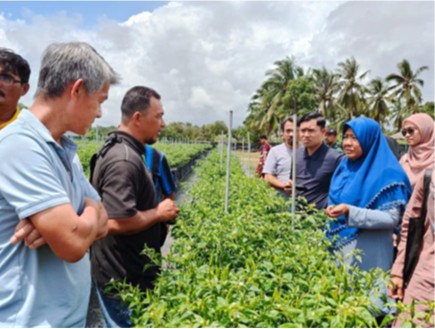
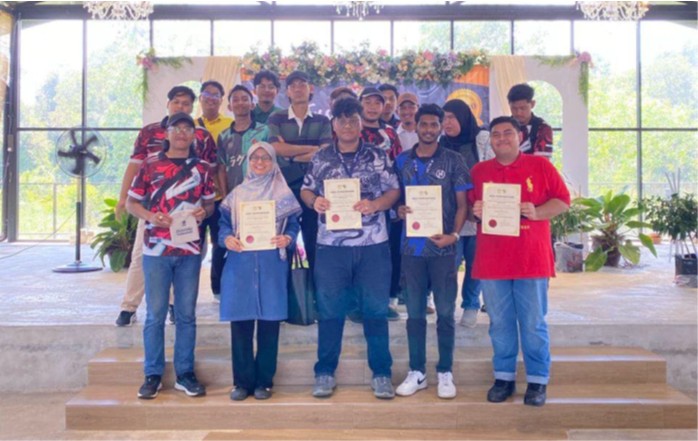
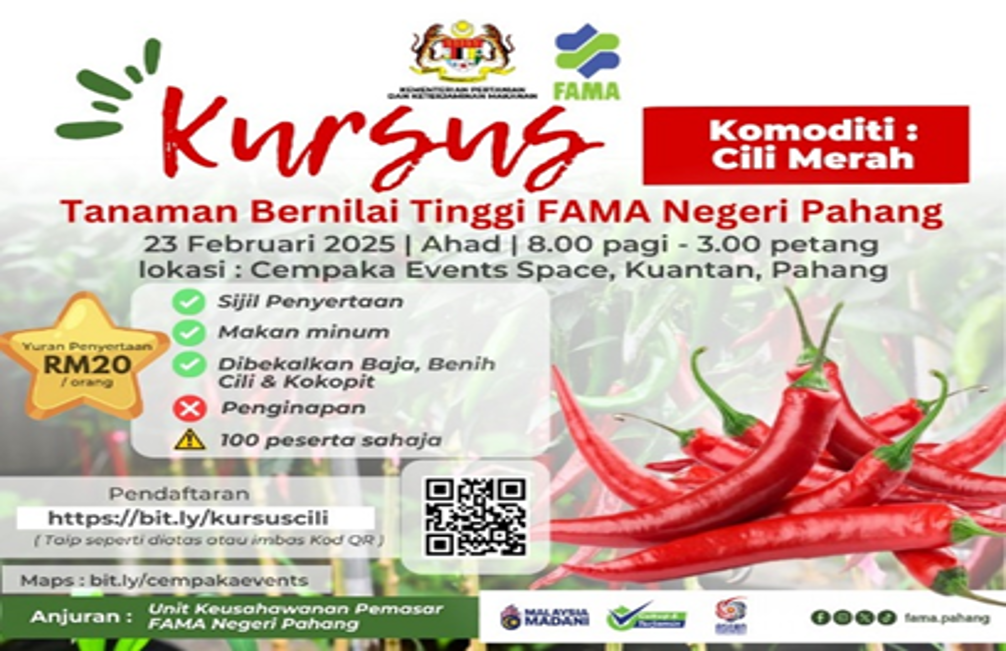
On February 23, 2025, the Federal Agricultural Marketing Authority (FAMA) of Pahang hosted the High-Value Crop Course: Red Chili Commodity at the Chempaka Event Space in Kuantan. This initiative brought together students from the Bachelor of Plantation Industry Management (Honours) program for an intensive, hands-on dive into the world of modern agrotechnology. Led by expert officers from FAMA Pahang, the course aimed to bridge the gap between academic theory and the practical demands of the modern agricultural industry.
The primary focus of the training was the fertigation system, a precision farming technique that combines irrigation and fertilization to deliver nutrients directly to the plants. This method is particularly vital for red chili, a high-value crop that often faces challenges such as soil-borne diseases and nutrient imbalances. By using a closed-loop dripping system and IoT (Internet of Things) applications, the course demonstrated how farmers can significantly reduce water and fertilizer waste while maximizing crop yields. As noted in the program’s objectives, this approach empowers students to “exploit precision agriculture techniques… to produce competent graduates with extensive theoretical and practical knowledge”.
Beyond technical skills, the course was deeply rooted in sustainability and global responsibility. The curriculum was designed to align with several Sustainable Development Goals (SDGs), specifically SDG 2 (Zero Hunger), SDG 6 (Clean Water and Sanitation), and SDG 12 (Responsible Consumption and Production). By emphasizing resource efficiency and green technology, the initiative supports the “Green Campus” agenda, fostering a mindset among students that prioritizes environmental stewardship alongside productivity.
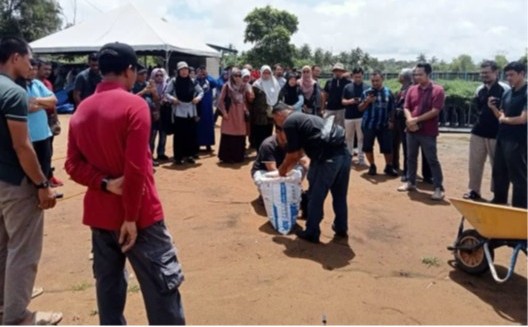
The impact of this program extends far beyond the classroom. Participants engaged in direct field activities, including system installation and the measurement of vital parameters like pH and Electrical Conductivity (EC). This practical exposure is intended to “enhance the employability of graduates in the fields of agrotechnology and urban farming” while preparing them to tackle future challenges like climate change and resource scarcity. Looking ahead, there are plans to further integrate advanced IoT sensors and automation to ensure that the next generation of agricultural leaders remains at the cutting edge of a greener, more resilient food system.