![LOGO_UCYP_UNIVERSITY_U_red-02[1]](https://ucyp.edu.my/wp-content/uploads/2025/05/LOGO_UCYP_UNIVERSITY_U_red-021.png)
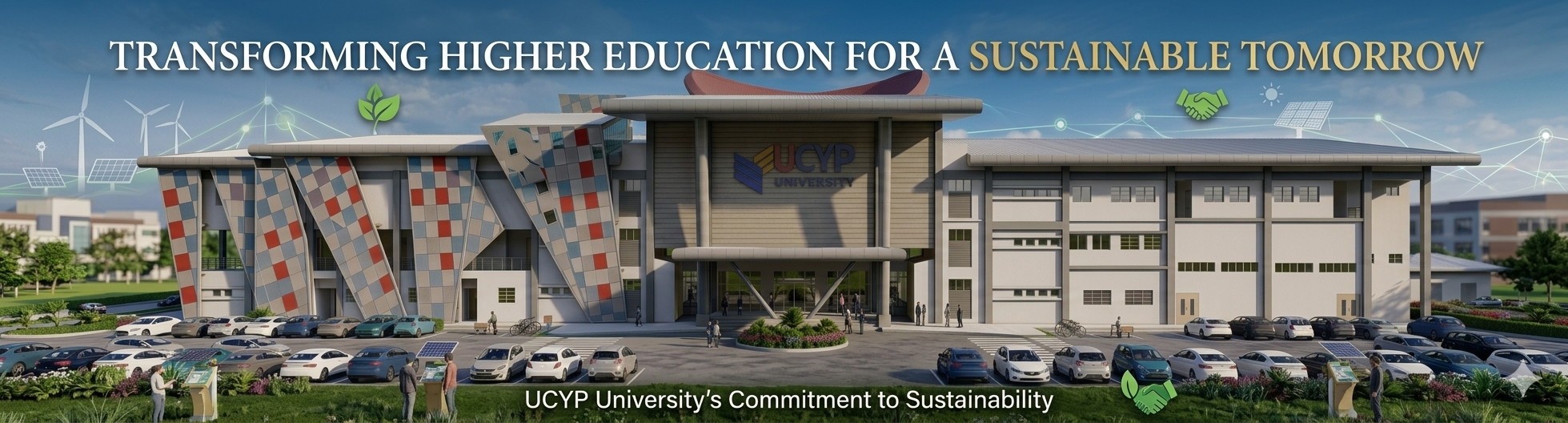
ADVANCING SUSTAINABILITY THROUGH SDG AND ESG AT UCYP UNIVERSITY
UCYP University is firmly committed to supporting both national priorities and global sustainability agendas for the benefit of the community and future generations. Guided by the United Nations Sustainable Development Goals (SDGs) and strengthened through Environmental, Social and Governance (ESG) principles, UCYP University integrates sustainability into its core functions of education, research, community engagement and institutional management.
The SDGs provide UCYP University with a global framework to address key social, economic and environmental challenges, while ESG principles ensure that these commitments are translated into responsible practices, ethical governance, and measurable impact. Through this combined approach, UCYP University nurtures socially responsible graduates, promotes inclusive growth, safeguards environmental sustainability, and upholds transparency and integrity in institutional governance.
As an adaptive university, UCYP University actively fosters collaboration with stakeholders at local, national and global levels. These efforts reflect UCYP University’s values of Creativity, Quality and Integrity, reinforcing its role as a higher education institution that not only educates, but also contributes meaningfully to sustainable development. By aligning SDG aspirations with ESG practices, UCYP University demonstrates its long-term commitment to building resilient communities and a sustainable future for generations to come.
OBJECTIVES
-
To embed SDG and ESG principles across UCYP University’s teaching, research, community engagement and governance.
-
To promote inclusive, ethical and environmentally responsible practices that benefit society and future generations.
-
To strengthen collaboration and accountability in delivering measurable sustainability impact at local, national and global levels.
POLICY ON SUSTAINABILITY
PDF Loading...
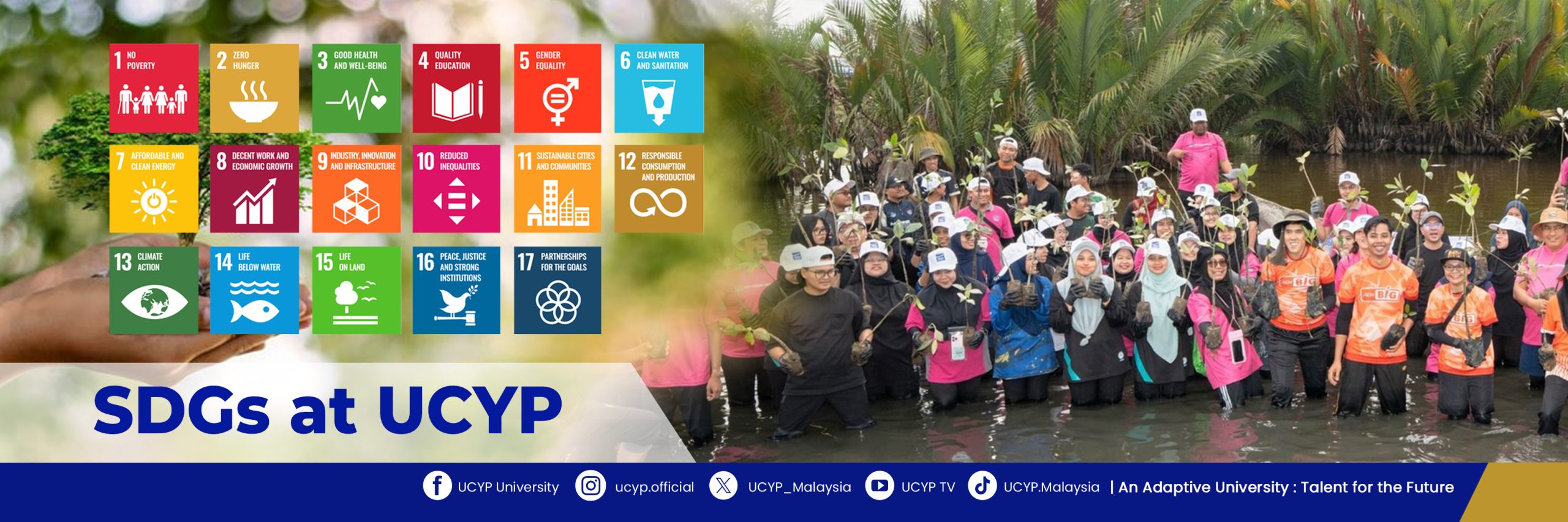
UCYP is committed to leading in sustainable development through active support of the United Nations’ 17 Sustainable Development Goals (SDGs). The SDGs guide our strategies, shaping every aspect of the university’s operations, from research and teaching to administration while strengthening community engagement and addressing global challenges effectively. As reminded in the Quran, ‘…and do not cause corruption on the earth’ (Al-A’raf: 56), we strive to ensure that every initiative preserves the environment, fosters social responsibility, and manages resources sustainably.
SDGs AT UCYP




Members of the UCYP community, from diverse backgrounds, are highly committed to embracing and implementing programs that support the Sustainable Development Goals (SDGs). Their active participation contributes meaningfully to initiatives both on campus and beyond, reflecting the university’s dedication to sustainability and positive social impact.
NEWS AND EVENTS
SDGs In Action



INTRODUCTION
The green campus environment is a synergy of sustainability, understanding and education practices to promote sustainable practices on an ongoing basis and create an eco-friendly atmosphere at the university. UCYP University as a wholly-owned university of Yayasan Pahang responded to the call to make the university the first green environment campus in the state of Pahang. This concept provides an opportunity for UCYP to implement and redefine the environmental culture of conserving and preserving the environment. In addition, a green campus means that a university actively contributes and gives ideas to the development of local communities that are environmentally sustainable.
Thus, the green campus environment makes an important contribution covering the aspects of education, research, collaboration of various government agencies and industry as well as the physical development of the campus. Green and sustainability campus programs are expected to raise awareness and proliferation of new ideas among academics, campus staff and the local community in general.
OBJECTIVES
The ranking aims to:
-
Contribute to academic discourses on sustainability in education and the greening of campuses.
-
Promote university-led social change with regard to sustainability goals.
-
Inform government agencies, international and local environmental agencies, and the community about sustainability programs on campus.
ECO-CAMPUS DESIGN STRATEGY
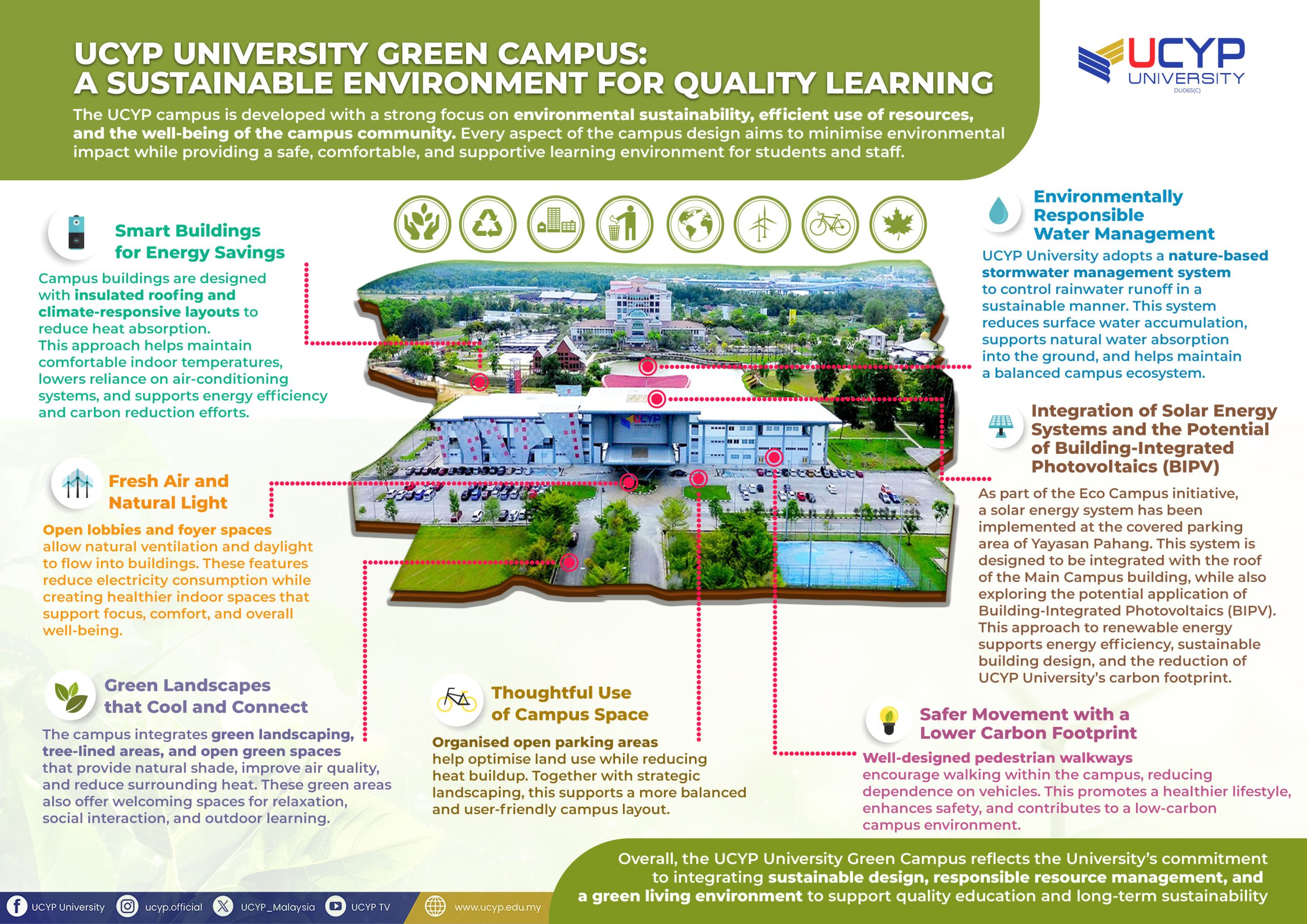
ECO LIVING ON CAMPUS (GREEN CAMPUS ELEMENTS)
Green Campus Elements
As a commitment to sustainable development and in alignment with the Sustainable Development Goals (SDG), the campus has implemented several Green Campus initiatives focusing on environmental preservation, resource conservation, and sustainable practices. These initiatives not only support environmental sustainability but also reduce operational costs and increase awareness among the campus community regarding the importance of protecting natural resources.
The main elements of the Green Campus that have been applied are as follows:
1. Rainwater Harvesting and Water Resource Conservation
A rainwater harvesting initiative has been implemented at the student dormitory areas as a proactive step to optimise water resource usage. This system involves the installation of rainwater storage tanks that collect rainwater through a drainage system from building rooftops.
The harvested rainwater is used specifically for landscape irrigation and watering plants around the campus through designated irrigation pipes. This implementation helps reduce reliance on treated water, contributing to more efficient, sustainable, and environmentally responsible water management practices. This initiative also aligns with SDG 6: Clean Water and Sanitation.
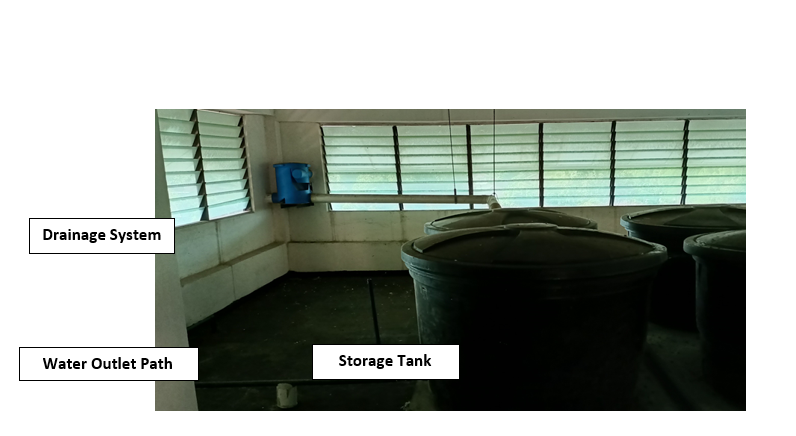
Rainwater storage tanks are used to collect and store rainwater for campus landscape irrigation.
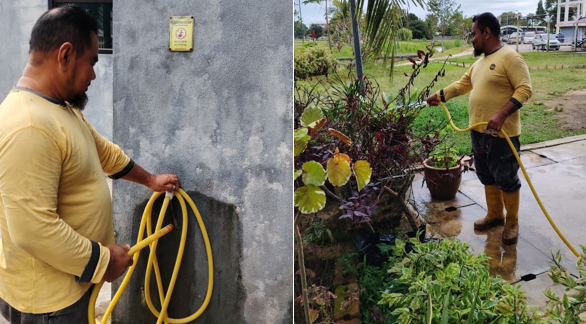
Landscape irrigation work using water from the rainwater storage tanks.
2. Energy Efficiency and Electricity Savings
To support energy-saving efforts and reduce the campus carbon footprint, the University has replaced conventional Traditional Fluorescent (TF) lamps with energy-efficient Light Emitting Diode (LED) lighting across campus facilities and student dormitories.
The LED lamps installed consume significantly lower wattage while providing equivalent or improved lighting performance. All LED fixtures are SIRIM-approved, ensuring compliance with safety standards, quality assurance, and energy efficiency requirements.
This initiative has led to reduced electricity consumption, lower long-term maintenance costs, and the promotion of sustainable energy practices, in alignment with SDG 7: Affordable and Clean Energy.
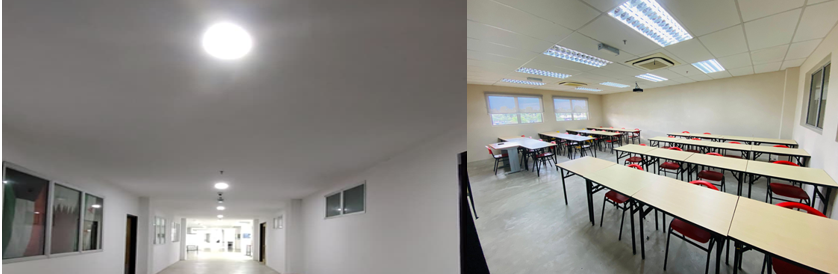
The use of LED lighting in campus and dormitory areas.

Among the types of LED lamps used.
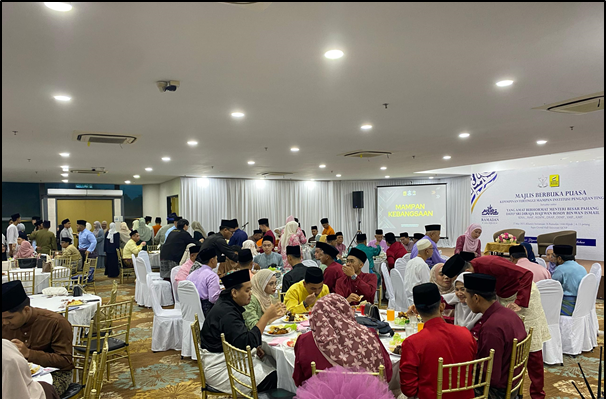
The use of LED lighting in the hall.